
Spring 2026 Construction Forecast: What Connecticut Contractors Need to Know
The Spring 2026 construction outlook paints a picture of an industry finding its footing — not booming, not collapsing, but adjusting to a new reality defined by stubborn interest rates, persistent labor gaps, and shifting demand patterns. For Connecticut contractors, developers, and project owners, understanding these Q2 trends is essential for pricing jobs, managing risk, and planning the year ahead.
US residential construction started 2026 at a seasonally adjusted rate of roughly 1.49 million housing units, with multifamily outpacing single-family builds. Mortgage rates near or above six percent, rising material costs, and labor shortages continue to constrain growth, though the industry shows resilience and cautious optimism heading into the spring building season.
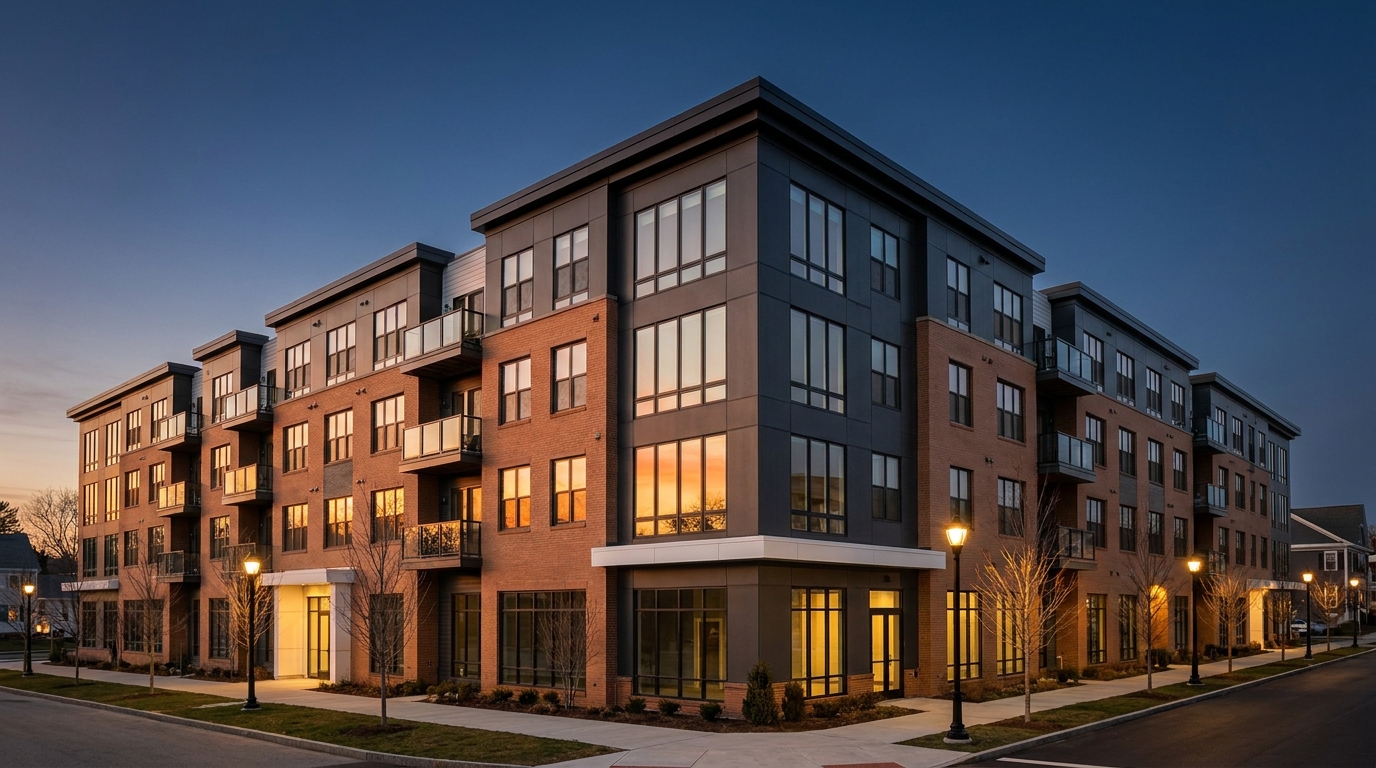
The Spring 2026 Construction Forecast at a Glance
As we enter the second quarter of 2026, US residential construction activity has stabilized after a volatile two years. Housing starts are up modestly year-over-year, regional permit activity has rebounded in the Northeast and West, and builders are reporting cautious optimism about the months ahead. Still, the industry is a long way from fully addressing the nation's housing shortage.
This matters to every Connecticut general contractor, subcontractor, developer, and real estate investor making decisions right now — from how many crews to staff this summer, to which insurance limits actually reflect today's replacement costs and labor exposures.
Housing Starts Stabilize, but Volatility Remains
In January 2026, privately owned housing starts reached a seasonally adjusted annual rate of roughly 1.49 million units — modestly above late 2025 and up year-over-year compared to January 2025. While month-to-month swings remain common, the overall trajectory suggests an industry that has stopped sliding and started leveling out.
That stabilization is encouraging, but it is not the same as recovery. Starts are still well below the levels needed to close the structural housing gap, and builders remain highly sensitive to week-by-week shifts in mortgage rates, material costs, and permitting timelines. Every Connecticut contractor quoting a new custom build or spec home is navigating the same moving target: can the client still afford the loan by the time the project closes?
Single-Family vs. Multifamily: The Widening Divide
One of the clearest trends in the Q2 2026 construction outlook is the growing gap between single-family and multifamily activity. Single-family starts have declined modestly on a month-to-month basis, while multifamily construction has posted stronger gains — a direct reflection of how affordability pressures are reshaping housing demand.
Why Multifamily Is Gaining Ground
Several forces are pushing investors and developers toward apartment and mixed-use projects:
- Rental demand is strengthening after a pullback in 2023 and 2024, and vacancy rates are tightening in key metros.
- Limited new supply is improving the long-term investment outlook for apartment developers.
- Would-be homebuyers priced out by high rates are staying in the rental market longer.
- Regional permit data shows multifamily rebounding strongly in the Northeast and West — including Connecticut metros like Hartford, New Haven, and Stamford.
Why Single-Family Is Softer
Single-family construction is more sensitive to mortgage rates and buyer sentiment than any other segment. With rates hovering near or above six percent, builders have scaled back production — especially in the entry-level price tier, where affordability cliffs are steepest. First-time buyers, priced out by monthly payments, are simply not hitting the market in the numbers builders need to justify new starts.
How Affordability and Financing Are Reshaping Builder Behavior
According to the National Association of Home Builders (NAHB), the combination of high financing costs, rising material prices, and persistent labor shortages has suppressed both housing production and demand. The underlying demand for housing remains strong — the problem is matching price points to what buyers can realistically afford.
Builders have responded in three ways:
- Scaling back entry-level starts where margins are thinnest and buyer pools are most rate-sensitive.
- Shifting toward build-to-rent and multifamily to capture rental demand.
- Offering rate buy-downs and concessions on move-in-ready inventory to keep transactions closing.
For Connecticut builders, this means a tighter spread between project cost and takeout value — which ripples into everything from how much working capital you need, to how aggressively you should bid, to whether your builder's risk insurance and general liability limits truly match what's on the jobsite today.
Regional Outlook: Where Growth Holds, Where It Softens
The 2026 story is not the same across the country. Regional disparities are wider now than at any point in the past decade.
The South: Notable Declines
Historically the most active region for residential construction, the South saw notable declines in single-family permits and starts during 2025. Affordability challenges, slowing migration from other regions, and saturation in several Sun Belt metros have pulled activity lower.
The Northeast and Midwest: Relative Stability and Growth
In contrast, the Northeast and Midwest have held up better — driven by multifamily development, population stability, and acute localized housing shortages. For Connecticut contractors, this regional resilience is meaningful: demand for housing in and around employment hubs remains robust, and the state's mix of renovation, ADU, multifamily, and commercial work provides a more diversified pipeline than many Sun Belt markets can currently claim.
Builder Sentiment and Structural Constraints
Builders enter Q2 2026 cautiously optimistic. Expectations for moderating mortgage rates have lifted sentiment, and industry groups expect a gradual pickup in single-family starts as financing conditions ease. But "cautious" is the operative word — because the structural constraints holding the industry back are not going away quickly.
Four Constraints Defining the 2026 Cycle
- Skilled labor shortages — experienced framers, electricians, plumbers, and finish carpenters remain in short supply, pushing wages and timelines up.
- Regulatory and land costs — zoning, permitting, and land acquisition costs continue to rise, especially in desirable Connecticut corridors.
- Supply chain friction — while less severe than the 2021–2022 crunch, certain categories (specialty electrical equipment, HVAC systems, imported finishes) still face lead-time volatility.
- Insurance and risk costs — rising liability and property exposures mean coverage placement, limits, and endorsement quality matter more than ever.
Commercial Construction: A Tale of Winners and Losers
Commercial construction spending in 2026 is expected to grow just enough to keep pace with inflation — meaning real growth is essentially flat. But beneath that headline, there's significant variation by sector:
Sectors Growing
- Data centers — the clear standout, with continued growth driven by AI infrastructure, cloud expansion, and reshoring of digital workloads.
- Institutional projects (healthcare, education, recreation) — should see modest but steadier growth, closely tied to where new residential development and population growth are occurring.
Sectors Declining
- Office construction — vacancy remains high, return-to-office progress is uneven, and new office starts continue to decline.
- Manufacturing construction — expected to continue declining after the 2023–2024 reshoring surge.
Sectors Holding Steady
- Retail and warehouse construction — largely flat after the post-COVID e-commerce surge, with new activity concentrated around logistics and last-mile distribution.

What the Spring 2026 Forecast Means for Connecticut Contractors
If you're running a Connecticut construction business in Q2 2026, the forecast translates into four practical priorities:
1. Reprice Risk Alongside Rising Costs
Material costs, labor costs, and replacement values have moved substantially over the past 24 months. Many contractors are carrying general liability, commercial auto, and inland marine policy limits that were set in 2022 or earlier. Those limits may no longer reflect today's jobsite realities — meaning a single covered loss could leave you underinsured exactly when margins are tightest.
2. Match Builder's Risk to Actual Project Economics
With project timelines extending and financing structures shifting, builder's risk policies need to be evaluated for duration, soft-cost coverage, and exclusions around weather, theft, and vandalism. A policy that fit a 9-month build in 2022 may be dangerously short for an 18-month build in 2026.
3. Lean Into Multifamily and Renovation Opportunities
The shift toward multifamily and institutional work in the Northeast is a real opportunity for Connecticut GCs and specialty trades. But bigger, more complex projects mean larger liability exposures, more subcontractor risk transfer paperwork, and stricter owner-controlled insurance program requirements. Make sure your program is structured for the work you're actually pursuing — not the work you did five years ago.
4. Stress-Test Your Workers' Comp Classification
As crews get reassigned across residential, multifamily, and commercial jobs, workers' compensation class codes and experience mod factors drift. A mid-year review can surface overcharges, misclassifications, and opportunities to tighten audit preparation before year-end.
Key Takeaways
- Housing starts are stabilizing at roughly 1.49 million annualized — modestly higher year-over-year but still below what's needed to close the housing gap.
- Multifamily is outpacing single-family, especially in the Northeast and West, as affordability pushes demand toward rentals.
- Mortgage rates near 6%+ continue to suppress entry-level single-family activity.
- Commercial construction is flat in real terms, with data centers and institutional projects as bright spots and office/manufacturing as drags.
- Structural constraints — labor, land, regulation, supply chain — will continue to cap the pace of recovery.
- Connecticut contractors should reprice risk, review builder's risk policies, and stress-test workers' comp classifications heading into the summer building season.
Frequently Asked Questions
What is the Spring 2026 construction forecast in one sentence?
US construction activity is stabilizing but constrained — residential starts are modestly higher year-over-year (roughly 1.49M annualized), multifamily is outpacing single-family, and commercial growth is essentially flat in real terms, with data centers as the standout sector.
Why are single-family housing starts declining while multifamily is growing?
Mortgage rates near or above 6% have priced many first-time buyers out of the single-family market, causing builders to scale back entry-level production. At the same time, rental demand is strengthening, vacancy rates are tightening, and limited new supply is improving the investment outlook for multifamily developers — especially in the Northeast and West.
How does the 2026 construction outlook affect Connecticut contractors specifically?
Connecticut sits within the Northeast region, which has shown relative stability and growth — particularly in multifamily construction. CT contractors should expect steadier demand than Sun Belt peers but should also prepare for rising material costs, persistent labor shortages, longer project timelines, and the need to re-evaluate insurance limits to reflect 2026 replacement costs.
Which commercial construction sectors are growing in 2026?
Data centers are the clear growth leader, driven by AI, cloud, and digital infrastructure demand. Institutional projects — healthcare, education, and recreation — are expected to see modest but steady growth. Office and manufacturing construction continue to decline, while retail and warehouse activity is largely flat.
What insurance coverages should contractors review before the 2026 building season?
Contractors should review general liability limits, commercial auto coverage, builder's risk policies (duration and soft-cost coverage), inland marine / tools and equipment, workers' compensation class codes and experience mod, and any owner-controlled insurance program (OCIP) requirements on larger multifamily or institutional projects. Many policies written in 2022 no longer reflect today's replacement costs and exposures.
Will mortgage rates come down in 2026?
Builder sentiment and industry forecasters expect a gradual moderation in mortgage rates during 2026, which should support a slow pickup in single-family starts. However, the consensus outlook is measured — most observers expect rates to remain elevated compared to 2020–2021 levels throughout the year.
What structural challenges are holding back construction growth?
Four structural headwinds remain: limited skilled labor availability, higher regulatory and land costs, ongoing supply chain friction in select categories, and elevated insurance and risk costs. Sustained improvement depends on easing financial conditions, construction-efficiency gains, and policy efforts to expand housing supply.
Bottom Line: Stability, Not Recovery
US residential construction in spring 2026 is neither collapsing nor fully recovering. The industry is adjusting to a new equilibrium — one defined by higher costs, tighter affordability, and evolving preferences that favor multifamily and build-to-rent. Commercial construction sits in a similar holding pattern, with data centers and institutional work providing upside while office and manufacturing drag on overall spend.
For Connecticut builders, developers, and project owners, the message is clear: this is a year to work smarter, not bigger. Price jobs carefully. Review every policy and limit against today's replacement costs. Lean into the segments — multifamily, institutional, renovation — where demand is holding. And partner with an insurance advisor who understands the construction market well enough to flag gaps before they cost you a project.
Ready to right-size your construction insurance for 2026?
Our Connecticut-based team will benchmark your current program, flag gaps, and make sure your coverage matches the work you're actually doing today — no pressure, no obligation.
Schedule a Free Coverage Review →